
Vertical
Counseling & Therapy Practices
Websites for counseling practices that actually book sessions, not just look pretty.
10 live builds in this vertical.
Paying-client case studies
Demo builds

Arkansas Counseling
Counseling & Therapy Practices

Arkansas Counseling .net
Counseling & Therapy Practices
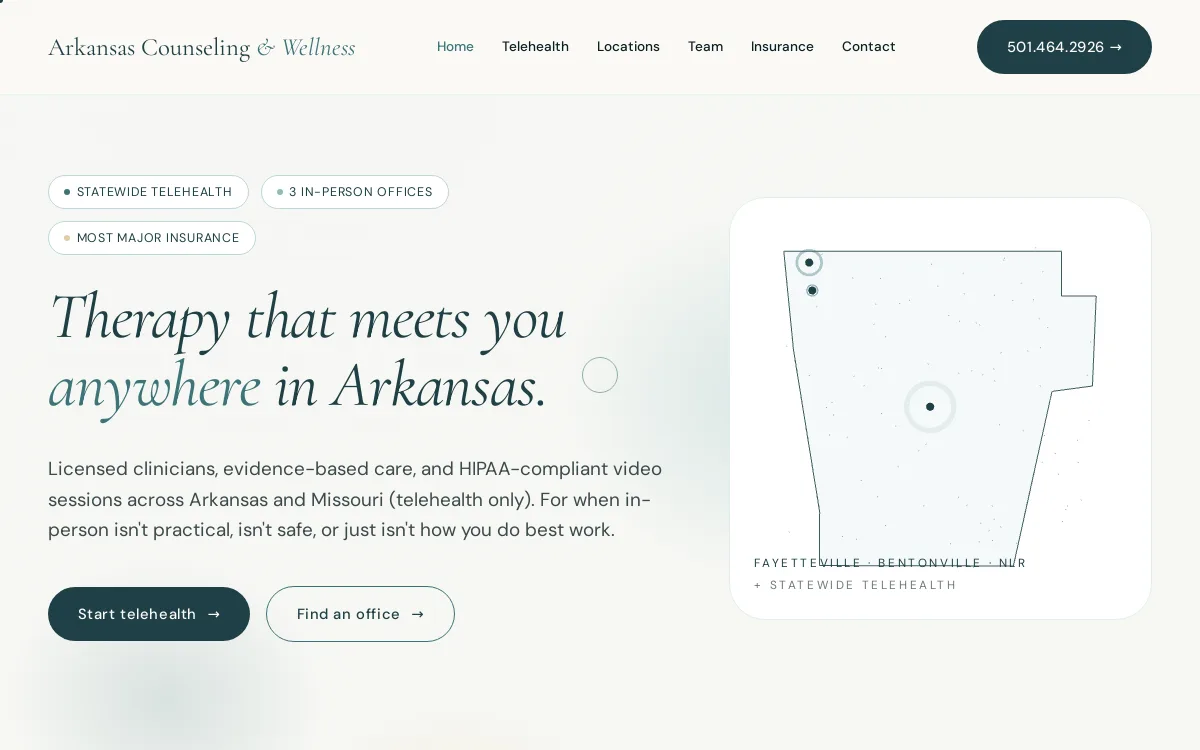
Arkansas Counseling & Wellness
Counseling & Therapy Practices

Central AR Group Counseling
Counseling & Therapy Practices
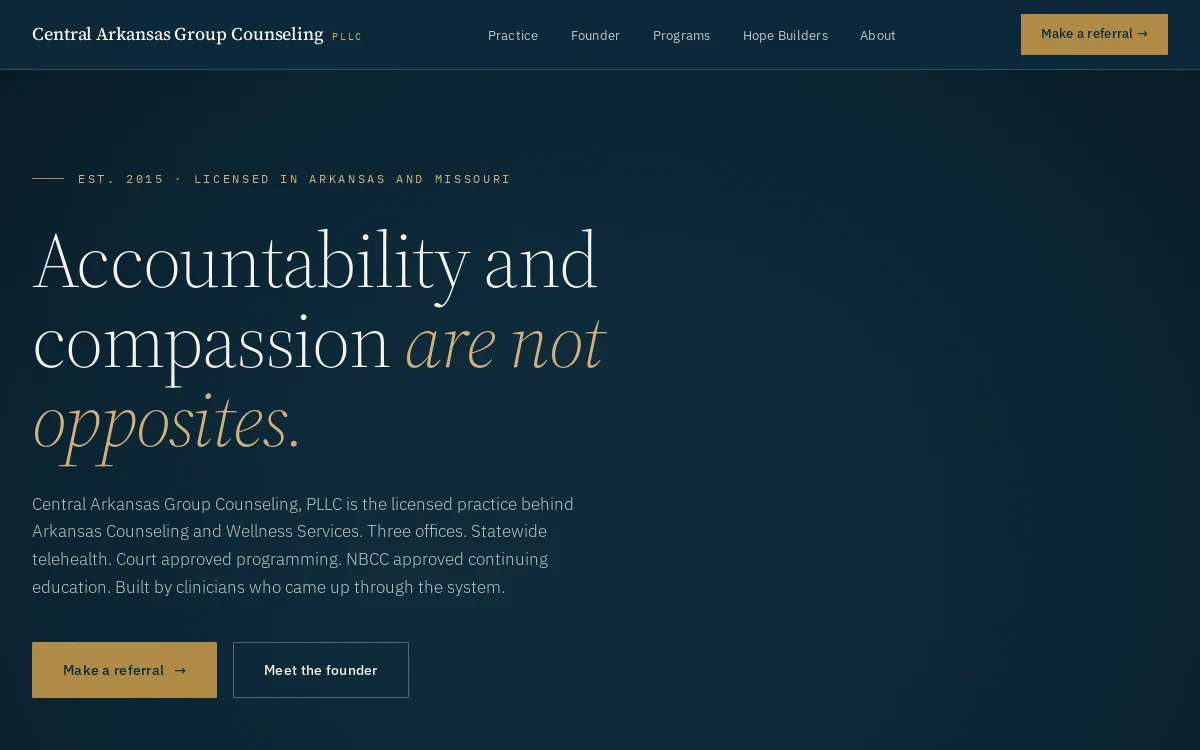
Central Arkansas Group Counseling
Counseling & Therapy Practices
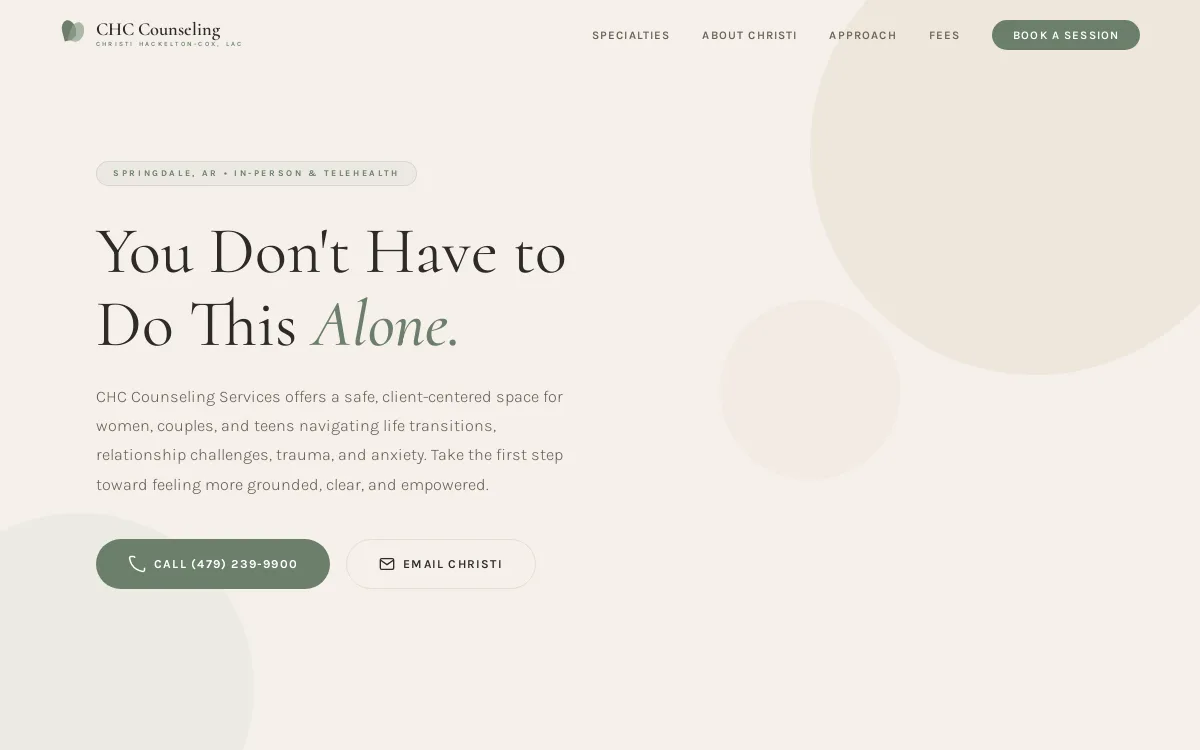
CHC Counseling
Counseling & Therapy Practices
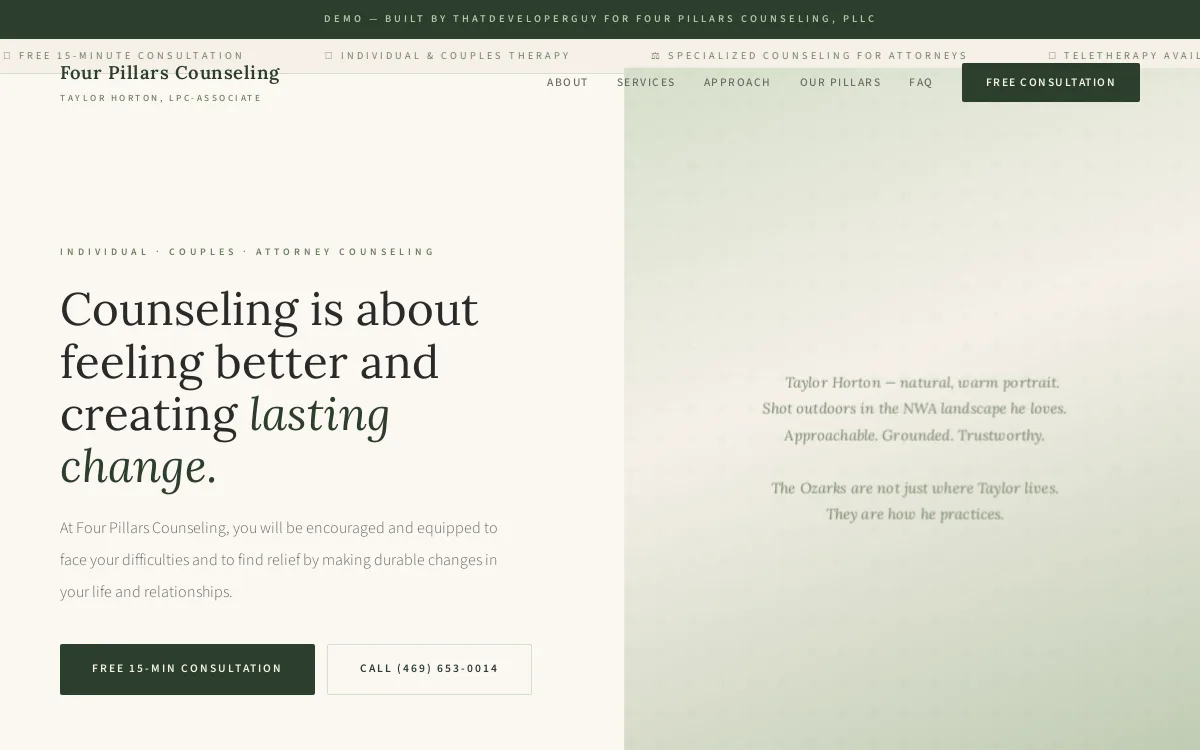
Four Pillars Counseling
Counseling & Therapy Practices
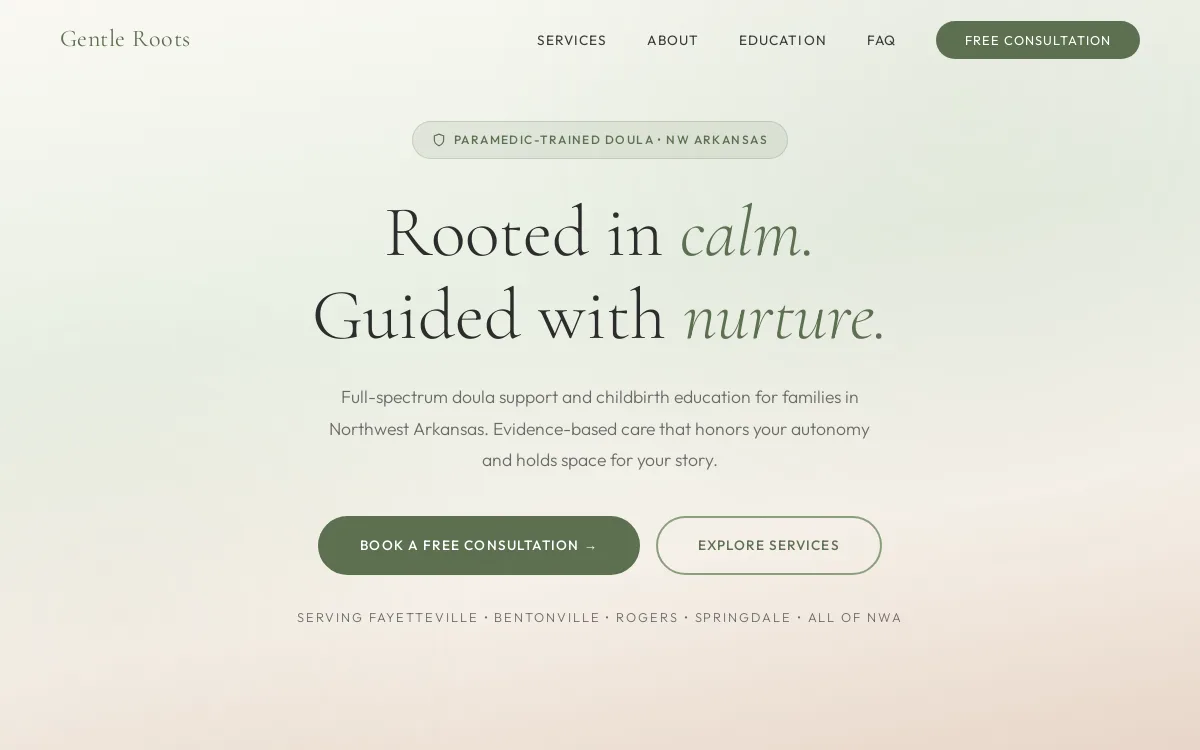
Gentle Roots
Counseling & Therapy Practices

NWA Therapy
Counseling & Therapy Practices
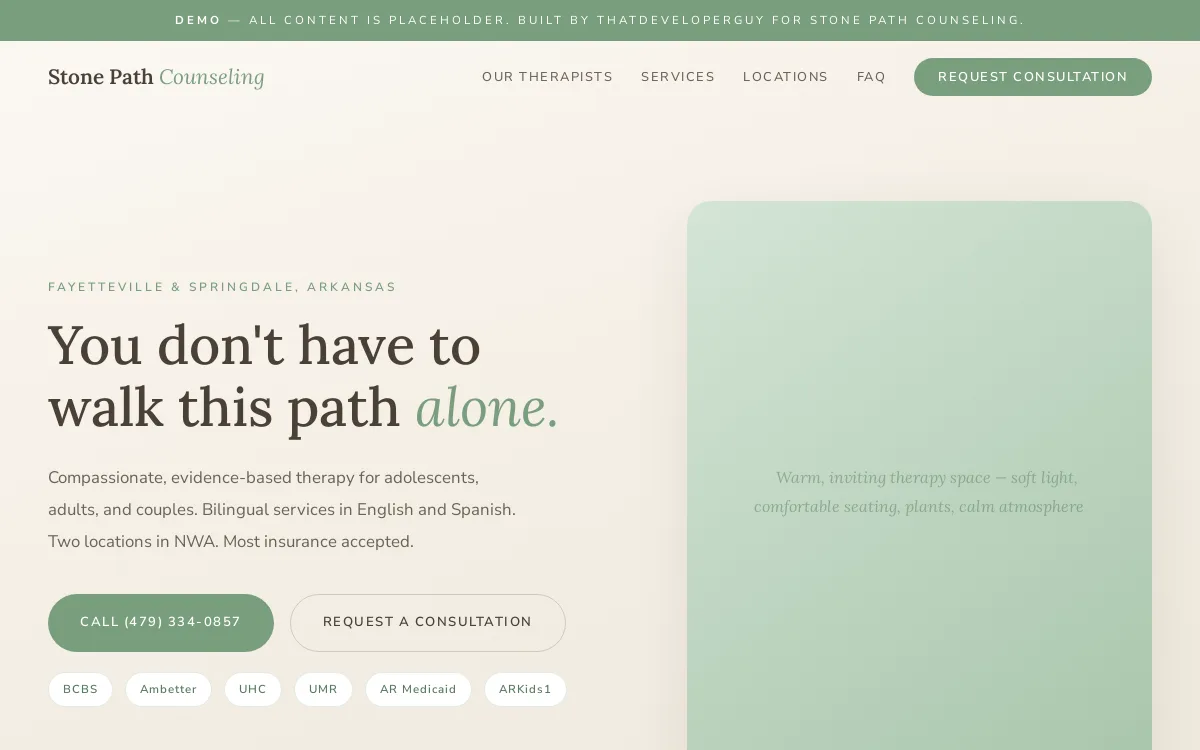
Stone Path Counseling
Counseling & Therapy Practices
FAQ
- Do you handle HIPAA-aware site design?
- Yes. We keep contact forms HIPAA-aware (no PHI in plain forms), suggest secure intake routing, and structure schema so prospects find clinical authority signals.
- Can you handle multiple practitioners?
- Yes. Person schema per clinician, individual bio pages, and search-engine-friendly practitioner directories.
Need a site like these?
Tell us what you're building. We'll match the right pattern.
Start a project →What this vertical needs to rank
Counseling and therapy is a Your-Money-or-Your-Life category, which means Google and AI answer engines hold these sites to a higher evidentiary bar than a typical local business. People search from a place of distress and specificity: "EMDR therapist near me," "Christian counselor taking new clients," "does this practice take Aetna," "trauma therapist accepting telehealth in [state]." A site that only says "compassionate, client-centered care" answers none of those queries. Practices rank when each page resolves a concrete decision the prospect is trying to make: this modality, this population, this insurance, this availability, this clinician.
The schema that actually fits a clinical practice is more than a generic LocalBusiness block. A solo or group practice maps cleanly to MedicalBusiness (or a sub-type such as Psychologist when accurate to licensure), with a Person entity for every clinician carrying their real credentials, license, and the medicalSpecialty or focus areas they treat. FAQPage markup wins the insurance, fees, and "what to expect at a first session" questions that dominate this funnel, and a precise geo plus areaServed matter because licensure is state-bound — a Missouri-licensed counselor cannot legally see a client physically located in Texas, and the site should make the service geography unambiguous to both humans and crawlers.
Trust signals in mental health are non-negotiable and specific. The signals that move both Google's quality assessment and a nervous prospect are the same ones: visible license numbers and issuing boards (LPC, LCSW, LMFT, PsyD, PhD), professional affiliations, accepted insurance panels listed in plain text, sliding-scale or self-pay rates, and individual clinician bios that read as real human expertise rather than stock copy. The conversion path has to respect privacy law from the first click — a public contact form must never collect protected health information in the clear. The correct pattern is a low-friction "request a consult" or scheduling handoff into a HIPAA-compliant intake or EHR system (SimplePractice, TherapyNotes, and similar), keeping the marketing site itself free of PHI while still making the next step obvious.
The most common reason these sites stall at "Discovered – currently not indexed" or never break past the homepage is thinness and sameness: one undifferentiated "Services" page that lists ten modalities in a sentence each, no per-clinician depth, no insurance answers, and a directory profile (Psychology Today, Zocdoc) outranking the practice's own domain for its own name. Sites also lose ground when reviews and credentials live only on third-party directories instead of being surfaced and structured on the owned domain. Earning visibility here is about demonstrable experience and authority — the exact E-E-A-T territory Google weights most heavily for health topics.
Related playbooks: See our healthcare and medical practice SEO framework for the clinical-page structure this vertical depends on, the YMYL content standards playbook for how Google evaluates health pages, the E-E-A-T signals framework for surfacing real clinician expertise, the local SEO framework for service-area and map-pack visibility, and the trust signals framework for credential and review presentation.
Frequently asked questions
Should my practice website list which insurance I accept?
Yes, in plain readable text, not buried in a PDF or only on a directory profile. "Does this therapist take my insurance" is one of the highest-intent queries in this vertical, and a prospect who cannot quickly confirm in-network status usually leaves for a directory that answers it for them. Listing accepted panels (and being clear about self-pay or sliding-scale rates and out-of-network superbills) both serves the searcher and gives search engines and AI assistants a fact they can cite. It also pre-qualifies inquiries so you spend less time on consults that were never a financial fit.
Is a public contact form on my site a HIPAA risk?
A standard contact form becomes a risk the moment it invites or collects protected health information — diagnoses, symptoms, medication details — and transmits it without a compliant pathway and a Business Associate Agreement. The safer design keeps the marketing form to non-clinical basics (name, preferred contact method, general reason for reaching out) and routes anything clinical into a HIPAA-compliant scheduling or intake system such as SimplePractice or TherapyNotes. We build the site so the conversion step is obvious while the public form never becomes a place clients dump sensitive history in the clear.
Why does Psychology Today outrank my own website for my practice name?
Directory profiles inherit the domain authority of a large, frequently-crawled site, so a thin practice website often loses even branded searches to its own Psychology Today or Zocdoc listing. The fix is to make your owned domain the most complete, authoritative source about your practice: individual clinician pages with real credentials and specialties, structured MedicalBusiness and Person schema, consistent name-address-phone details, and content depth on the modalities and populations you actually treat. Directories are still useful as referral channels and consistency signals — but they should point to a site substantial enough to win its own name.
How do I show clinician credentials so they help both clients and Google?
Give each clinician a dedicated bio page that states their license type and number, issuing state board, degrees, years in practice, and the specific issues and populations they treat — then mirror those facts in Person schema linked to the practice entity. For a health topic, Google's quality systems weight demonstrable expertise heavily, and a nervous prospect is scanning for the same proof. Surfacing credentials on the owned domain (rather than leaving them only on a license-lookup site or directory) is what converts a stranger into a booked first session and what gives AI answer engines an accurate, quotable basis for recommending the practice.