
Vertical
Wellness & Medical Spa
Service-menu-driven wellness sites with credential schema, treatment-area pages, and booking integration.
10 live builds in this vertical.
Demo builds
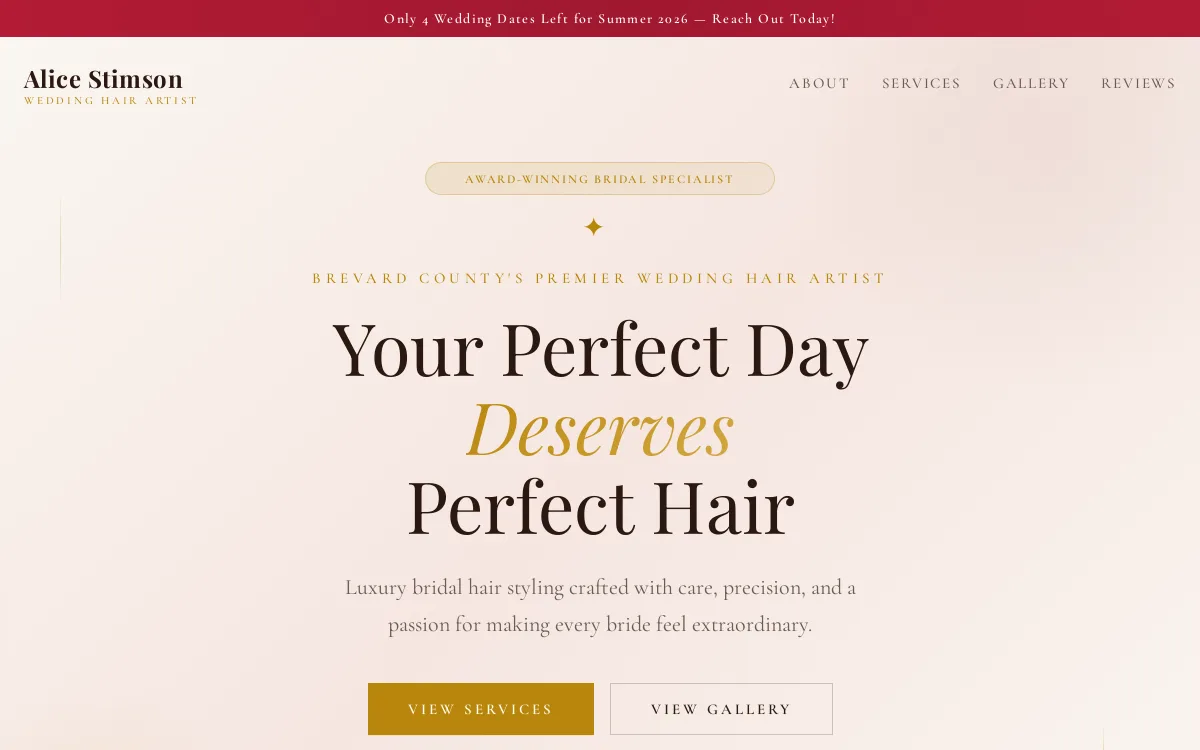
Alice Stimson Salon
Wellness & Medical Spa
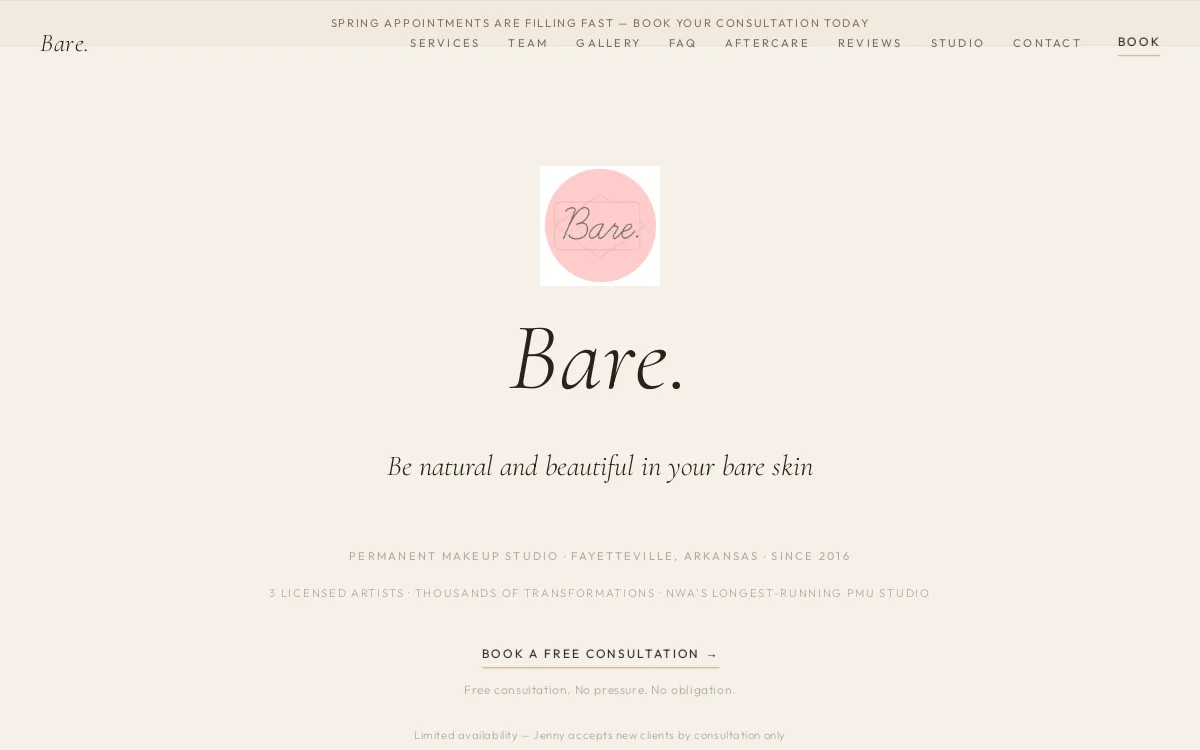
Bare With Jenny
Wellness & Medical Spa
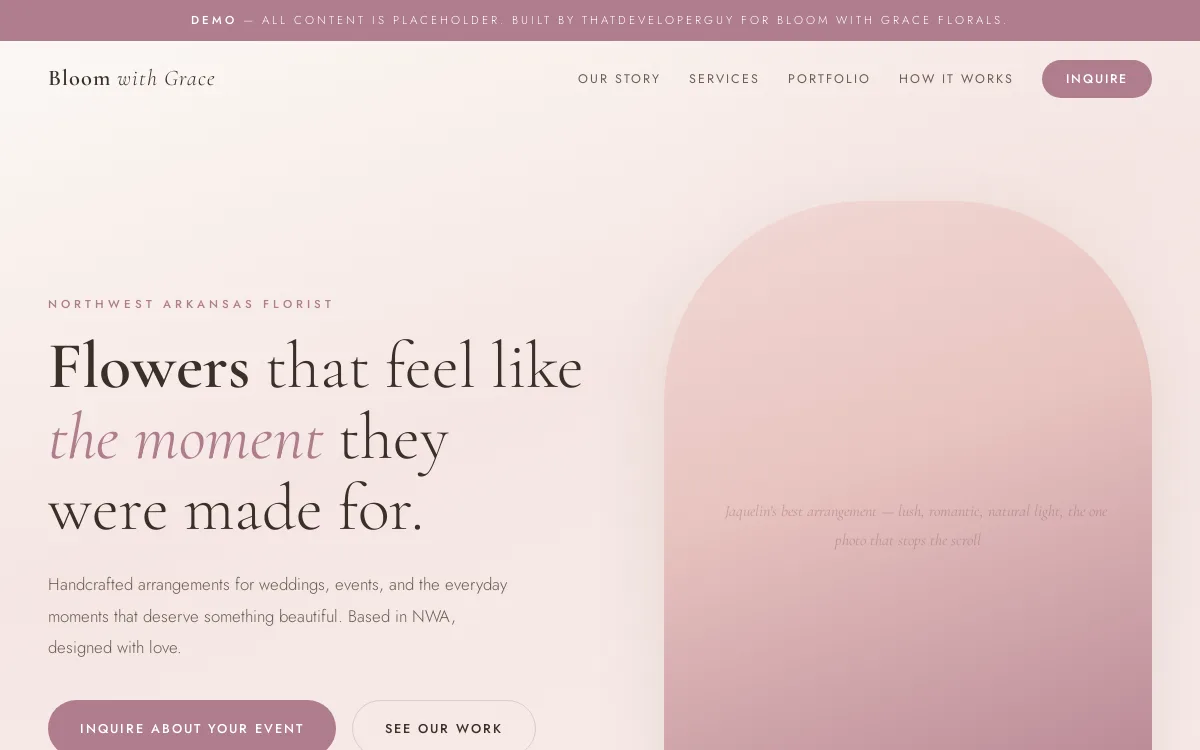
Bloom With Grace
Wellness & Medical Spa
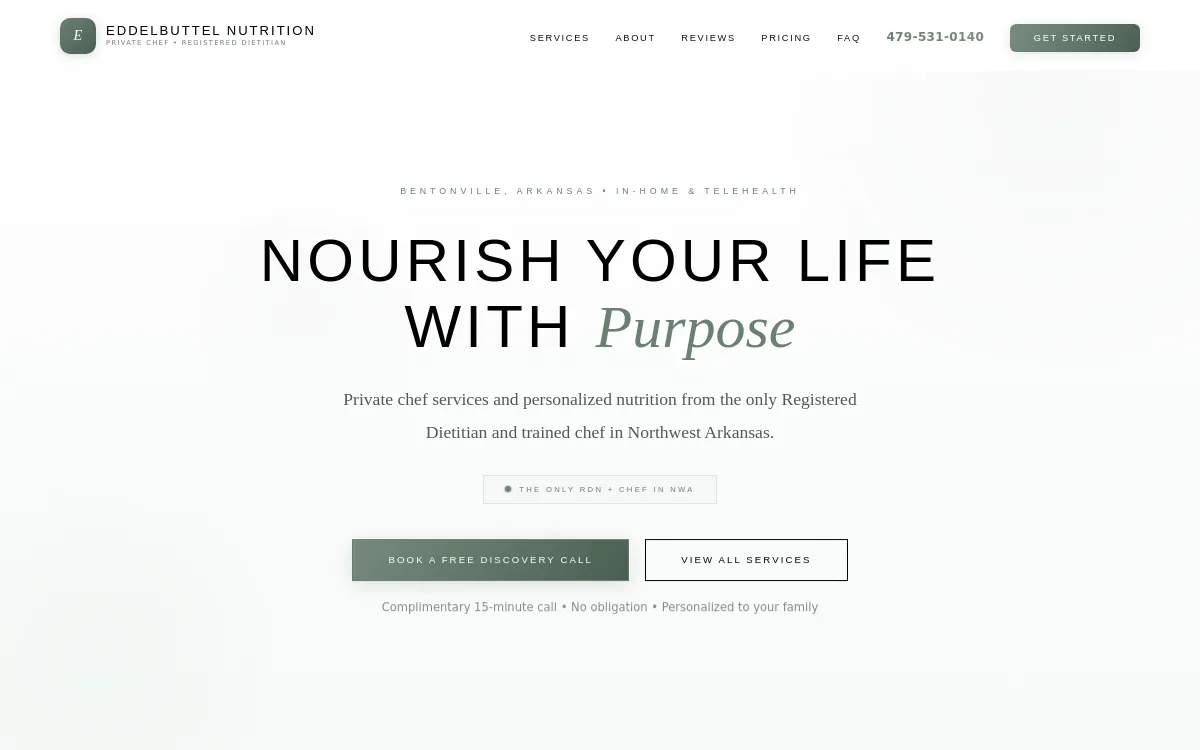
Eddelbuttel Nutrition
Wellness & Medical Spa
Frank Barrett
Wellness & Medical Spa
Frank's Supplements
Wellness & Medical Spa

Glow Beauty
Wellness & Medical Spa
Joanne Haley LMT
Wellness & Medical Spa

KDM Dermatherapy
Wellness & Medical Spa
Thrive Med Spa
Wellness & Medical Spa
Need a site like these?
Tell us what you're building. We'll match the right pattern.
Start a project →What this vertical needs to rank
Wellness and med spa searches are health-adjacent, so Google evaluates these pages under stricter standards than it applies to most service businesses. A site offering Botox, microneedling, hormone optimization, IV therapy, medical weight loss, or licensed massage is touching outcomes people care about for their bodies, which pulls the pages into the same scrutiny that applies to medical content. That means the question is rarely whether the design looks polished. It is whether the site makes it obvious who is performing the treatment, what their license or supervising-physician relationship is, what the procedure actually involves, and what the realistic recovery and risk picture looks like. Sites that skip this read as anonymous, and anonymous pages in a health category get held back.
The buyer is almost always mid-decision when they search, not just browsing. The queries that convert are procedure-plus-location and procedure-plus-question: "lip filler near me," "how much is CoolSculpting in [city]," "is microneedling worth it," "med spa open on Saturday," "Botox vs Dysport," and "hydrafacial before and after." Each of those wants a different page. A homepage that lists every service in one scroll cannot rank for any of them well, because it gives the search engine no single, focused passage to match against a specific procedure intent. The fix is a dedicated page per treatment, each one carrying its own pricing range, its own preparation and aftercare detail, its own FAQ, and its own provider attribution, so the page reads as written by someone who performs the procedure rather than by a marketing template.
Schema for this vertical is layered, not a single tag. The business itself should carry MedicalBusiness or DaySpa with full NAP, geo coordinates, opening hours, and the same address that appears on the Google Business Profile, because the proximity and consistency of those signals drive map-pack placement more than anything on the page. Individual injectors, nurses, aestheticians, and supervising physicians belong in Person markup with their credentials and licensing, since that is the entity layer search engines and AI assistants use to decide a provider is real and qualified. Each procedure page benefits from a Service or MedicalProcedure node plus an FAQPage built from the questions patients actually ask, which is also the markup most likely to surface the business as a cited answer in AI Overviews, ChatGPT, and Perplexity when someone asks what a treatment costs or whether it hurts.
Most med spa sites underperform for the same handful of reasons. They lean on a before-and-after gallery with no crawlable text, so there is nothing for the engine to read. They bury the menu inside a third-party booking widget that renders client-side, leaving the prices and service names invisible to crawlers. They omit the provider entirely, which fails the credibility test in a category where credibility is the whole point. And many quietly cross compliance lines, publishing patient photos without documented consent or making outcome claims a regulator would object to, which is both a legal exposure and a trust signal in the wrong direction. The pages that win are the boring, honest ones: clear provider, clear procedure, clear price range, clear aftercare, fast first paint, and a booking path that does not hide the most important information behind a script.
Related playbooks: the healthcare and medical SEO framework covers how to structure provider and procedure pages so health-adjacent content earns trust; our YMYL framework explains the elevated standard Google applies to anything touching health and money; the E-E-A-T playbook shows how to surface real practitioner experience and credentials on the page; the local SEO framework ties the build to map-pack and near-me visibility; and the trust signals framework details the licensing, review, and consent cues that convert a cautious first-time patient.
Frequently asked questions
Why does my med spa rank below competitors with worse reviews?
Reviews influence the map pack, but they are one input among many. The more common reason a better-reviewed spa ranks lower is that its services live on a single homepage or inside a booking widget, while the competitor has a separate, indexable page for each treatment with real text, pricing context, and provider attribution. Google ranks pages against specific queries, so a spa with a dedicated "lip filler" page that names the injector and explains the procedure will usually outrank a higher-rated competitor whose filler service is one line on a crowded menu. Structure and crawlable content beat star count on procedure-level searches.
Does a med spa site really get judged differently than other local businesses?
Yes. Because treatments like injectables, weight-loss programs, and hormone therapy affect health, these pages fall under what Google calls Your Money or Your Life topics and are held to a higher bar for expertise and trust. Practically, that means the search engine wants to see who is performing the work, their credentials or supervising-physician relationship, and accurate, non-exaggerated descriptions of procedures and risks. A site that hides the provider or makes unsupported outcome claims will struggle to rank no matter how attractive the design, while one that names qualified practitioners and describes treatments honestly clears the bar.
My online booking tool holds all my services and prices. Is that enough?
Usually not. Most embedded booking and scheduling tools load their content with JavaScript after the page renders, which means search engines and AI assistants often cannot read the service names, descriptions, or prices inside them. The booking widget is a fine conversion tool, but the actual menu, treatment explanations, and pricing context need to exist as real HTML text on the page so they can be crawled and quoted. The reliable pattern is a readable treatment page that links or scrolls into the booking flow, rather than relying on the widget to be both the storefront and the only place the information lives.
What schema should a med spa or wellness studio use?
Start with MedicalBusiness or DaySpa for the business entity, including the exact name, address, phone, geo coordinates, and hours that match your Google Business Profile, since consistency there drives local ranking. Add Person markup for each injector, nurse, aesthetician, or supervising physician with their credentials, because the provider is the trust anchor in a health category. Then give each treatment its own page with Service or MedicalProcedure markup and an FAQPage built from the real questions patients ask about cost, pain, downtime, and results. That FAQ markup is also what most often gets your business pulled into AI answers when someone asks what a treatment costs or whether it works.