
Vertical
Fishing & Outdoor Guides
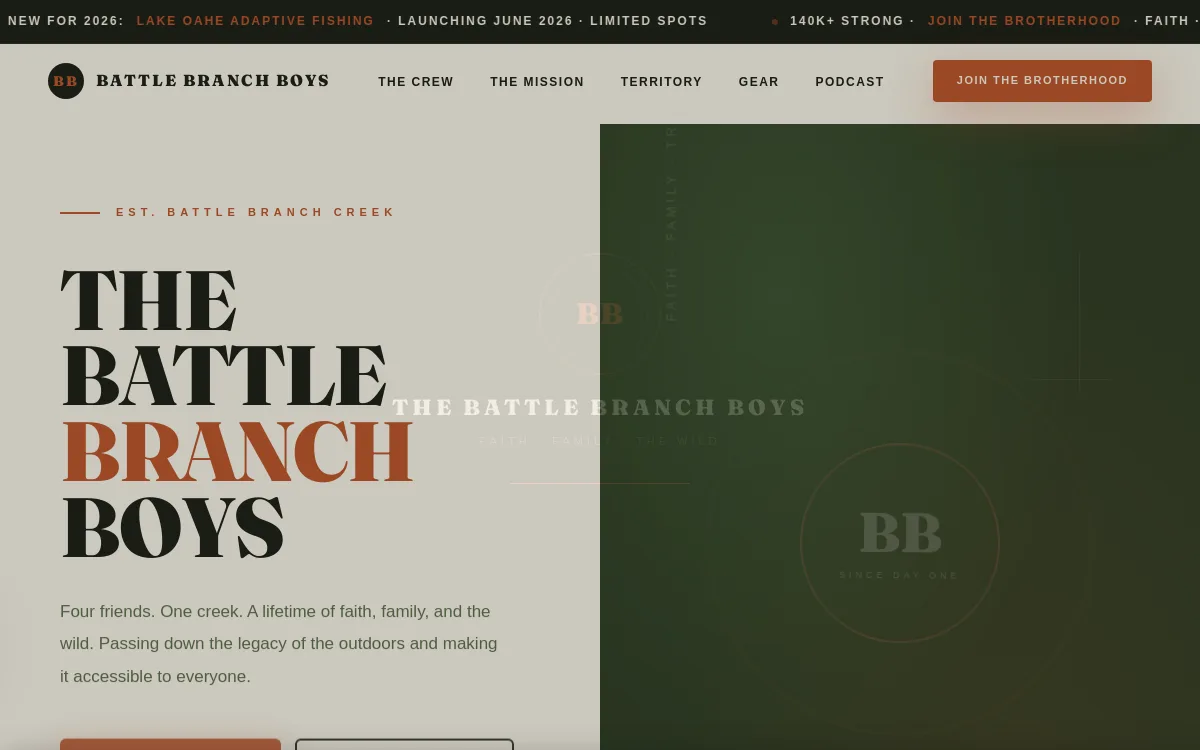
Booking-first guide service sites that win seasonal queries and showcase trip authenticity.
3 live builds in this vertical.
Paying-client case studies
Demo builds

Need a site like these?
Tell us what you're building. We'll match the right pattern.
Start a project →What this vertical needs to rank
A fishing guide or outdoor outfitter lives or dies by a tiny, seasonal search window. Demand for "smallmouth guide near me," "fall striper charter," or "guided trout trip [river name]" spikes for a few weeks, then collapses, and the booking decision usually happens on a phone the night before someone drives to the water. The site has to load fast on rural LTE, answer the three questions every angler asks before they pay a deposit, and make the next step obvious: which species, which season, which water, what it costs, and how to lock a date. Galleries and a contact form are not enough. Pages that convert are organized around the actual trip product, not around the captain's biography.
The buyer-intent queries split into three buckets, and most guide sites only serve one. Species-and-water queries ("white river trout guide," "Table Rock musky charter") need dedicated trip pages with the body of water named in the H1, the URL, and the on-page text. Seasonal queries ("spring crappie guide," "ice-out lake trout") need content that names the months and the bite window so Google and AI engines can match the calendar. And logistics queries ("do I need a fishing license for a guided trip," "what's included on a half-day charter," "fly fishing trip for beginners") are where most bookings are won or lost, because they answer the hesitation that keeps a first-timer from clicking. A site that owns all three of these buckets stops competing only on the homepage and starts collecting impressions on dozens of long-tail trip and FAQ queries that the directory aggregators can't out-rank locally.
Trust signals in this vertical are concrete and verifiable, which is exactly what E-E-A-T and AI answer engines reward. Coast Guard captain's license numbers, state guide permits and registration, the specific outfitters or lodges a guide runs trips for, USCG/insurance status for charter operations, and a real catalog of dated trip photos with the species and the water in the alt text all signal experience that a templated booking page cannot fake. The conversion path should be a short reach to a deposit: a real phone number that taps to call, a same-day text option, and a booking or availability request that does not bury the angler in a multi-step form. The most common reason these sites fail to rank is thinness and duplication. One generic "Charters" page tries to serve every species and every season at once, image-only galleries give crawlers no text to index, and the contact details sit in a script the bot never executes, so the listing never earns a trusted NAP. The fix is server-rendered text, one page per trip type, and structured data that names what's actually for sale.
- Service + Offer + FAQPage schema, not just LocalBusiness: a half-day and full-day trip are distinct
Serviceentities with their ownOfferprice ranges, durations, and "what's included" — this is what surfaces in rich results and gets quoted by AI Overviews. - LocalBusiness with accurate geo and serviceArea: the launch point or marina, the bodies of water served, and a consistent NAP that matches Google Business Profile and the state guide registry.
- One indexable page per species and water, with the river, lake, or bay named in the H1, URL slug, and first paragraph — not a single catch-all charters page.
- Seasonal content that names the months so the site matches calendar-driven queries and AI engines can answer "when is the best time to fish [water]."
- Crawlable text on every photo and a real image sitemap, because trip galleries are the proof of catch but are invisible to search until the species and location live in alt text and captions.
- A deposit-ready conversion path — tap-to-call, text, and a low-friction availability request — rendered in the HTML, not injected by a script that bots skip.
Related playbooks: our local SEO framework covers Google Business Profile, NAP consistency, and the launch-point geo signals guides depend on; the 2026 schema types guide maps which Service, Offer, and FAQPage markup actually earns rich results for a trip-based business; trust signals shows how captain's licenses, permits, and real reviews build the experience signals Google and AI engines reward; image SEO turns a catch gallery into indexable proof; and voice and conversational search handles the "near me," seasonal, and night-before mobile queries that drive most guide bookings.
Frequently asked questions
My bookings come from word of mouth and a Facebook page. Why do I need a website to rank?
Word of mouth fills your regulars' dates, but the open weekdays and the shoulder season come from anglers searching "guided trout trip near [water]" the night before a drive. Facebook pages rarely rank for those queries and can't carry Service or Offer schema, so search engines and AI answer engines have nothing structured to quote. A real site with trip pages, named waters, and a Google Business Profile is what shows up when a stranger is ready to book and has never heard of you.
Should I put every species and trip type on one charters page, or split them up?
Split them. A single page trying to rank for trout, bass, musky, and fly trips at once is thin for all of them and competes with itself. One indexable page per species or water — with that name in the H1, URL, and first paragraph — lets each trip rank for its own query and gives Google a clear entity to match. It also lets you price and describe each trip honestly with its own Offer markup instead of a vague "call for rates."
What trust signals actually matter for getting found as a guide or charter?
Concrete, verifiable ones: your USCG captain's license or state guide registration number, the lodges or outfitters you run trips with, insurance and licensing status for charters, and a dated, captioned catalog of trip photos that name the species and the water. These are experience signals that Google's E-E-A-T standards and AI engines weight heavily, and they're things a generic competitor or directory listing can't replicate. Real reviews tied to your Google Business Profile reinforce them.
Anglers book from their phones on bad rural signal. Does that change how the site should be built?
Yes. The site should serve its core content and contact details in the first byte of HTML so it renders on slow LTE without waiting on scripts, and the booking path should be a one-tap call or text plus a short availability request — not a heavy multi-step form. If the phone number and trip details only appear after JavaScript runs, both a hurried angler and a search crawler can miss them. Fast, server-rendered pages also help you appear in the "near me" and voice queries that drive last-minute bookings.