
Vertical
Tree, Lawn & Landscaping
Service-area sites that win seasonal queries and stay top-of-mind year-round.
7 live builds in this vertical.
Demo builds
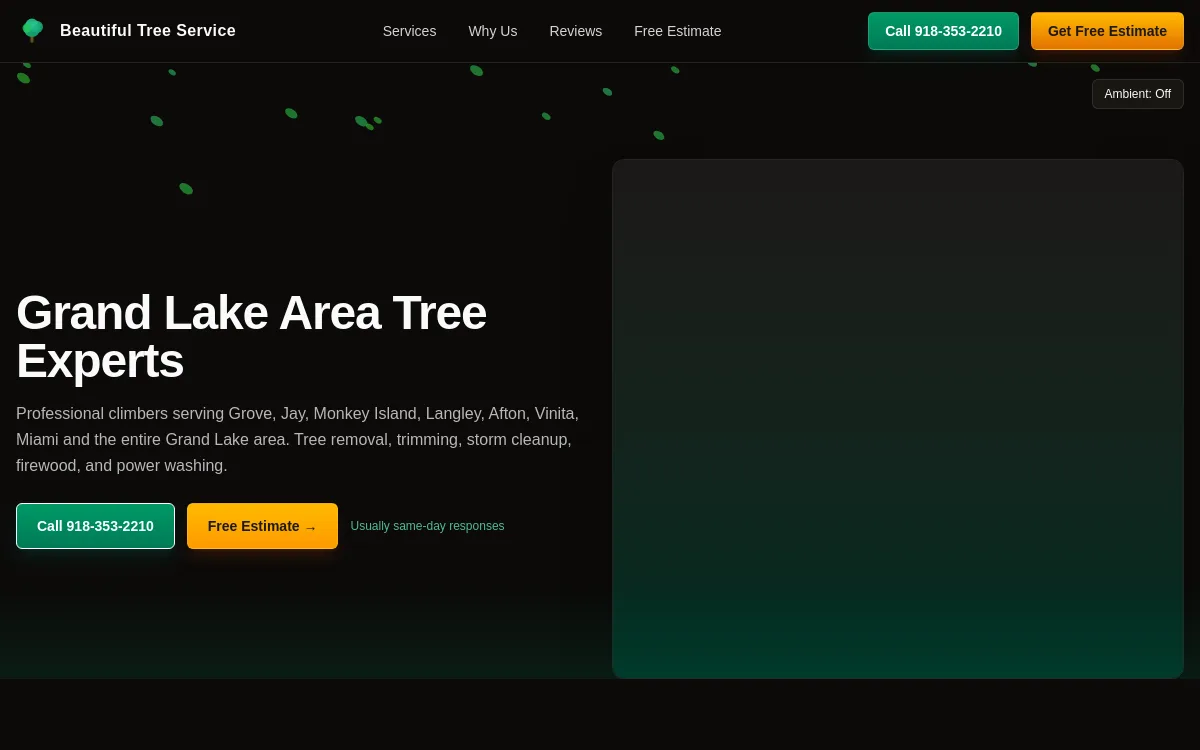
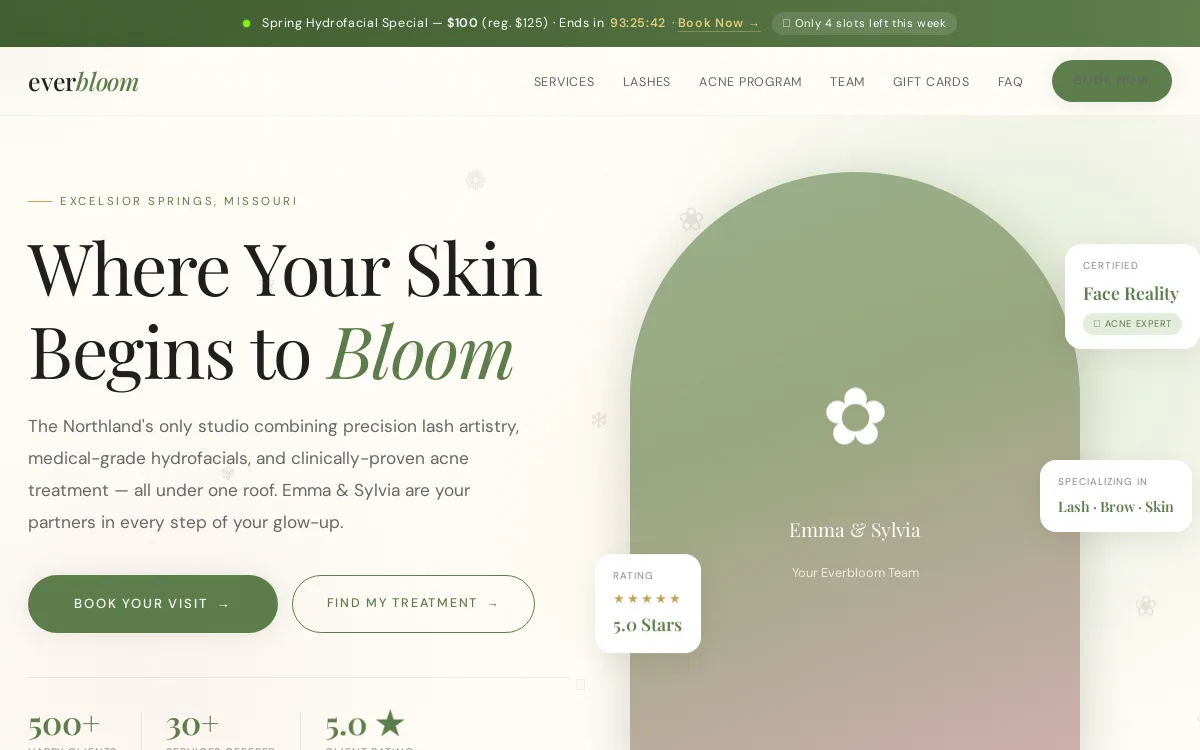



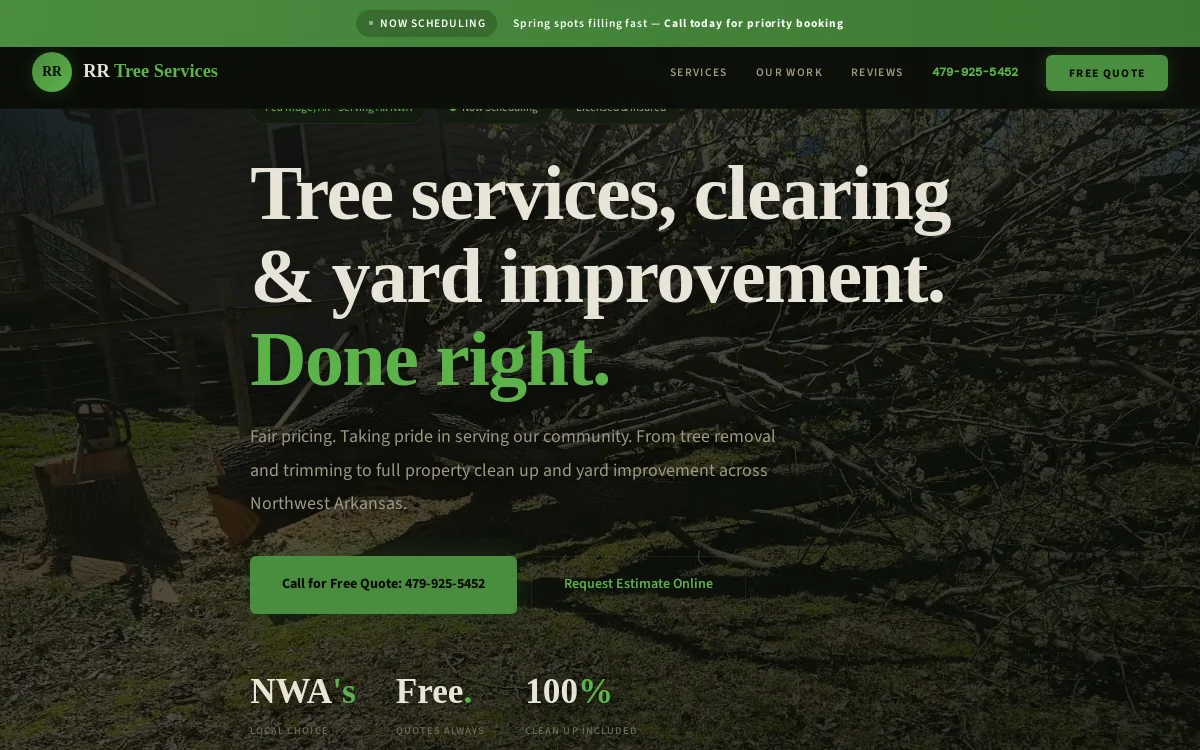
Need a site like these?
Tell us what you're building. We'll match the right pattern.
Start a project →What this vertical needs to rank
Tree, lawn, and landscaping demand is split between two very different buyer states, and a site has to serve both. One is urgent and unscheduled: a storm drops a limb on a roof, a dead oak leans over the driveway, and the homeowner searches "emergency tree removal near me" expecting a same-day answer with a phone number that rings. The other is planned and seasonal: spring cleanups, recurring mowing contracts, fall leaf removal, sod and irrigation installs, paver patios. A page that reads like a generic brochure ranks for neither, because it never matches the specific intent behind either query. The structure has to make the urgent path one tap away and the planned path easy to research, compare, and quote.
The work is also intensely local and hyper-seasonal, which changes what Google rewards. Customers hire the crew that services their town, not one two counties over, so a single homepage targeting "landscaping" loses to competitors with dedicated, crawlable pages per service area. And demand swings hard by month: aeration and overseeding peak in fall, mosquito and grub treatments in summer, snow and ice work in winter for northern crews. Pages that name the season, the turf type, and the local pest or tree species (emerald ash borer, bagworms, fescue versus bermuda) read as written by someone who actually works the area, which is exactly the signal both Google's helpful-content systems and AI answer engines are trying to reward.
The schema that fits this trade is service-and-place oriented, not product oriented. A LocalBusiness (or the more specific LandscapingBusiness / HomeAndConstructionBusiness) type carries NAP, areaServed, geo coordinates, and hours; each offering gets a Service entity with a clear serviceType and the cities it covers; and an FAQPage answers the predictable cost, timing, and licensing questions in a format AI Overviews can lift verbatim. Review markup matters here too, because tree work and landscaping are high-consideration, get-multiple-quotes purchases where star ratings and recent, named reviews do most of the persuading before a call is ever placed.
Most sites in this vertical fail to rank for avoidable reasons. Photos are uploaded straight off a phone at full resolution with no alt text, so the before/after galleries that should be a competitive advantage instead tank page speed and tell crawlers nothing. The business serves eight towns but has one page, so it never appears for seven of them. Licensing and insurance status (ISA-certified arborist, proof of liability coverage, bonding) is buried or missing, even though it is the single biggest trust gate before someone lets a crew near their house with a chainsaw. And contact paths are an afterthought, when for emergency tree work a tappable phone number above the fold is the entire conversion.
- A real per-town or per-service-area page set, each with unique copy, local landmarks, and its own internal links, instead of one homepage trying to rank everywhere.
- Distinct service pages for the actual jobs (tree removal, trimming and pruning, stump grinding, mowing contracts, mulch and bed work, sod, irrigation, hardscaping) matched to how customers phrase them.
- An always-visible, tappable phone number and a fast estimate-request form, with an emergency path that does not make a panicked homeowner scroll.
- Compressed, responsive before/after imagery with descriptive alt text, so galleries build trust without wrecking Core Web Vitals.
- Explicit trust signals on the page: arborist or contractor licensing, liability insurance, bonding, years in business, and recent reviews with names and locations.
- Seasonal and service FAQ content that states pricing factors, timing, and cleanup expectations plainly enough for AI answer engines to quote.
Related playbooks: our local SEO framework covers the service-area page structure and Google Business Profile work this trade lives or dies on; the structured-data framework details the LocalBusiness, Service, and FAQ markup that fits a service trade; the trust-signals framework shows how to surface licensing, insurance, and reviews where buyers and crawlers both see them; the image SEO framework handles compressing and captioning before/after galleries; and the AI Overviews framework explains how to phrase service and pricing answers so engines like ChatGPT, Gemini, and Perplexity cite the business directly.
Frequently asked questions
How do I get my tree or landscaping business to show up for the towns I actually serve?
Give each service area its own real page with unique content, not one homepage listing every town in a footer. A page that names the town, mentions local landmarks or neighborhoods, describes the specific work you do there, and links to your relevant service pages gives Google a clear reason to rank you for that location. Pair that with a complete, accurate Google Business Profile and a consistent name, address, and phone number across the site, and you start appearing in both the map pack and the regular results for each area you cover.
My before-and-after photos are my best selling point but the site is slow. What do I do?
Phone photos uploaded at full size are usually the cause. Resize and compress every image to web dimensions, serve them in a modern format like WebP, set explicit width and height, and lazy-load anything below the first screen so the page renders fast. Then add descriptive alt text to each one, for example "oak removed from front yard, Cassville before and after," which both helps accessibility and gives search engines and image search something to index. You keep the visual proof that closes jobs without the slow load time that hurts rankings.
What makes someone choose my crew over the other quotes they got?
For tree and landscaping work the decision turns on trust, because the homeowner is letting a crew operate heavy equipment near their house. Put the proof on the page, not buried in an about section: your licensing or arborist certification, proof of liability insurance and bonding, how long you have been in business, and recent reviews that show real names and the town the job was in. Make sure that information is also in your structured data so search engines and AI assistants can repeat it when someone asks who is reputable nearby.
Will AI assistants like ChatGPT or Google's AI Overviews recommend my business?
They can, if the page gives them clean, quotable facts. AI answer engines pull from pages that state things plainly: which services you offer, the areas you cover, what affects pricing, and how fast you respond to emergencies, ideally backed by FAQ and LocalBusiness structured data. Vague brochure copy gives them nothing to cite. Specific, well-organized answers to the exact questions people ask, such as what tree removal costs depend on or whether you handle storm cleanup, are what get a business named in those AI responses.